

TPC Phase I Recognized as One of Taiwan's First Marine Effective Conservation Areas
TPC Phase I Recognized as One of Taiwan's First Marine Effective Conservation Areas
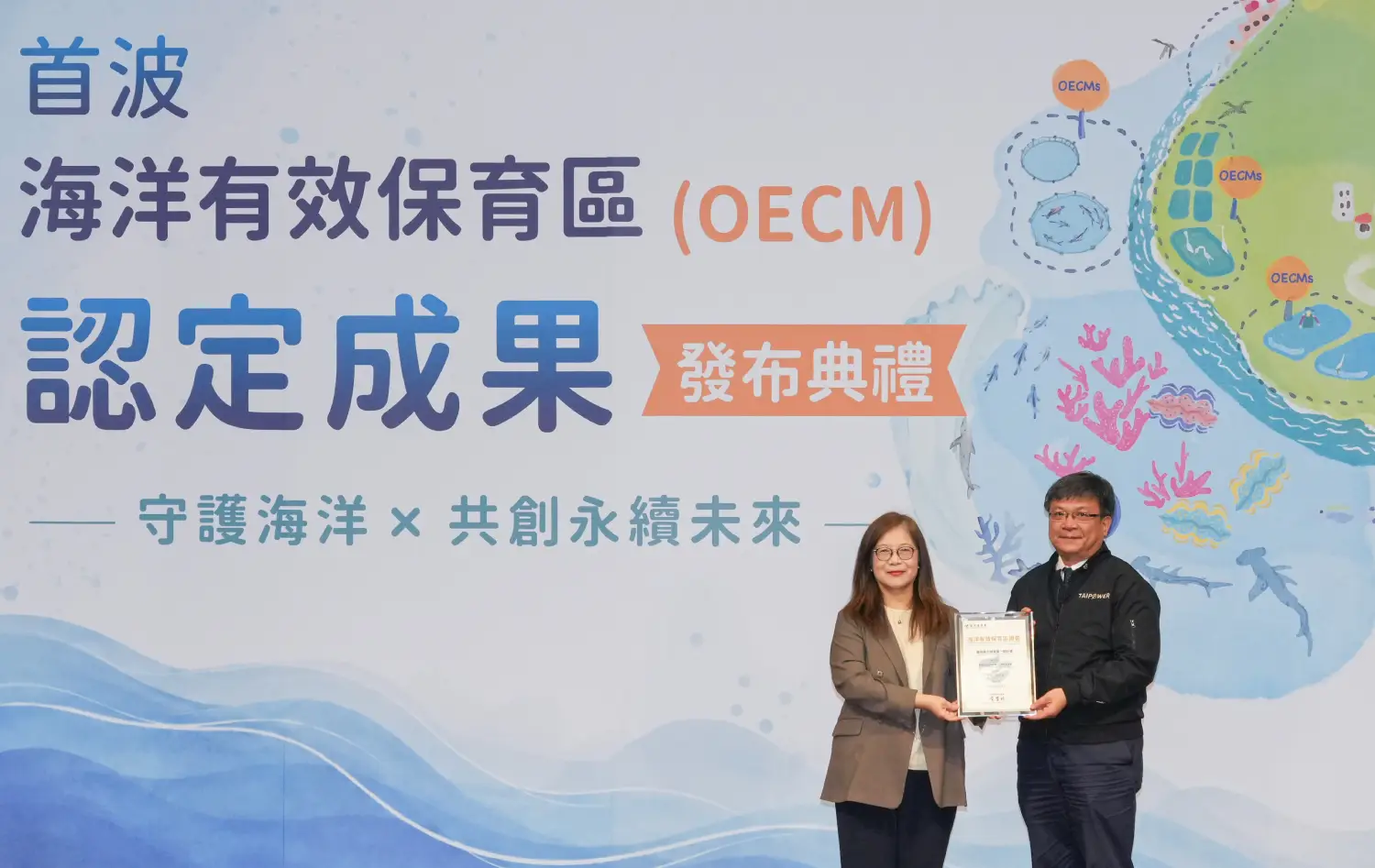
The Ocean Affairs Council (OAC) today held the "First Batch of Marine OECMs Recognition Ceremony" at the NTUH International Convention Center. Taipower Chairman Wen-Sheng Tseng (right) received the certification and commendation from OAC's Minister Bi-Ling Kuan on behalf of the company.
(Source:MOEA)
Taiwan Power Company (Taipower) continues to advance the integration of power infrastructure and ecological conservation. Following the certification of the Dajia River and Wanda Hydropower Plant sites as domestic terrestrial "Other Effective Area-Based Conservation Measures (OECMs)" in March, TPC Phase I has now been recognised as part of Taiwan's first batch of Marine OECMs for marine environments. An award ceremony was held today (22).
Taipower stated that the 21 turbines at the TPC Phase I generate more than 300 million kWh of renewable electricity annually. In addition to supplying green power, the project's underwater foundations also serve as artificial reefs, helping promote marine biodiversity and supporting the development of healthier offshore ecosystems. The company also emphasized that it will continue striving to balance stable power supply with environmental and ecological conservation, demonstrating how offshore wind development can contribute to both energy transition and marine sustainability.
The Ocean Affairs Council (OAC) today held the "First Batch of Marine OECMs Recognition Ceremony" at the NTUH International Convention Center. Taipower Chairman Wen-Sheng Tseng received the certification and commendation from OAC's Minister Bi-Ling Kuan on behalf of the company.
TPC Phase I was recognised in this inaugural round of marine OECMs designations, alongside the undeveloped area of CPC Corporation Taiwan's Guantang LNG Terminal and the dedicated Taiwan Cement's Hoping Industrial Port, marking them as Taiwan's first officially recognised marine conservation sites under the OECMs framework.
Taipower stated that the TPC Phase I located off the coast of Fangyuan Township, Changhua County, officially commenced commercial operations at the end of 2021. The project's 21 wind turbines generate more than 300 million kWh of renewable electricity annually, enough to supply over 70,000 households for a full year.
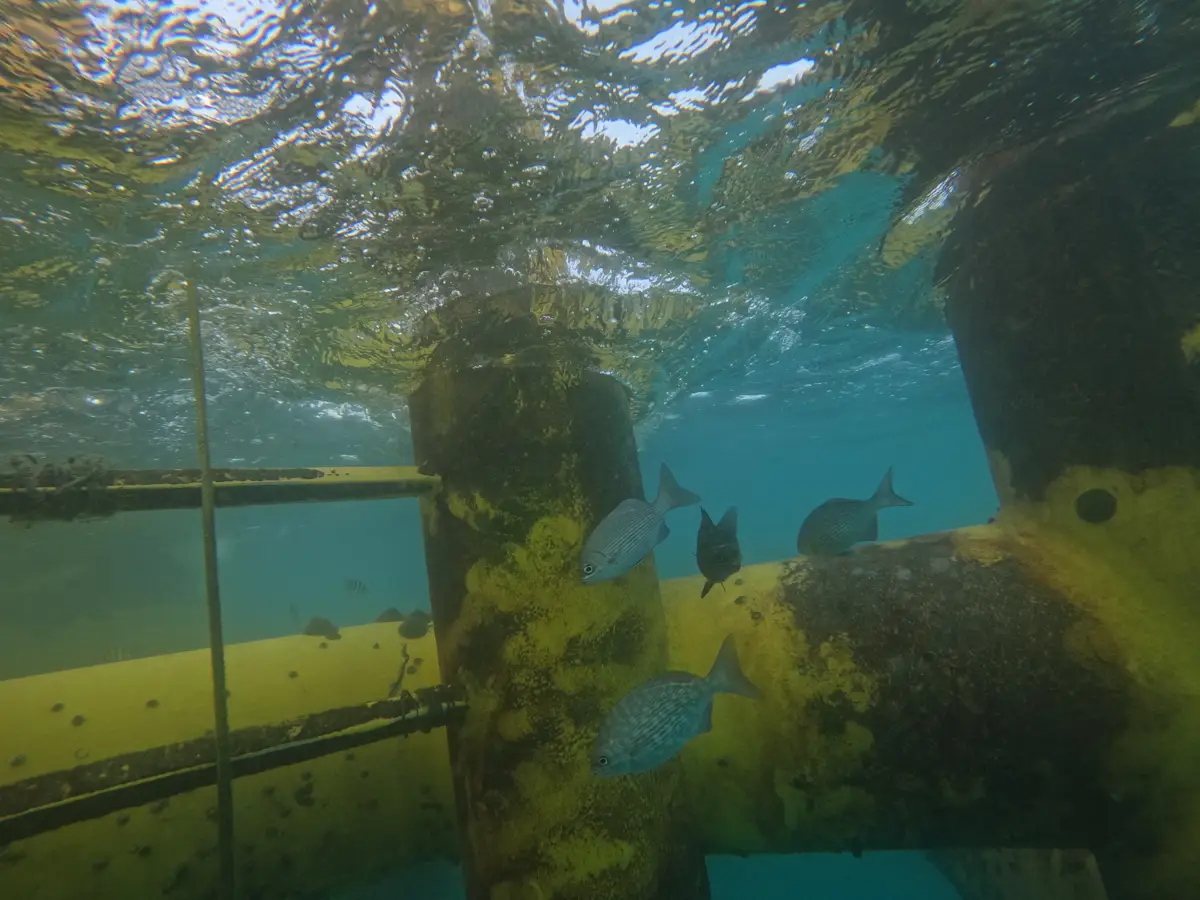
The wind farm's underwater foundations also serve as artificial reefs, with organisms such as barnacles and sponges attaching to the structures and subsequently attracting reef-associated fish species, including orange-spotted grouper and five-lined snapper. The development has contributed to enhancing marine biodiversity in the surrounding waters.
(Source: MOEA)
Beyond renewable power generation, the wind farm's underwater foundations also function as artificial reefs. Marine organisms such as barnacles and sponges attach themselves to the foundation surfaces, subsequently attracting reef-associated fish species including orange-spotted grouper and five-lined snapper. As a result, the original sandy-mud seabed environment has gradually evolved into a reef-like ecosystem with enhanced marine biodiversity.
Taipower further noted that, according to monitoring data from a research team at National Taiwan Ocean University, the number of fish species recorded in the Offshore Phase I wind farm area has increased from 118 species prior to construction to 171 species today, representing growth of nearly 50%.
In addition, several fish species identified within the wind farm are considered potential prey species for the endangered Indo-Pacific humpback dolphin, indicating that the TPC Phase I project and its surrounding waters demonstrate a degree of ecological connectivity. This suggests the wind farm may provide supplementary ecological value to nearby dolphin habitats.
Taipower stated that, to ensure the long-term ecological sustainability of the TPC Phase I wind farm area, the company conducts regular offshore maintenance of turbines and surrounding marine environments, while also establishing an emergency response mechanism in coordination with the Coast Guard Administration to enable rapid action in the event of unexpected incidents.
The utility further monitors marine ecological conditions through underwater inspection imaging and publicly discloses monitoring results on a quarterly basis via its official website. In parallel, Taipower continues to engage with local fishing communities through briefings and workshops, including initiatives that invite local fishermen to serve as cetacean observers and promote local employment opportunities within the offshore wind sector, with the aim of jointly safeguarding the marine environment alongside stakeholders.
Source: MOEA
