

2026 Comprehensive Energy Development & Carbon Quest For The Future" Forum: AI Reshapes the Energy and Net-Zero Race; Industry Faces 3 Major Shifts in Green Power, Sustainability Accountability and Low-Carbon Transition
2026 Comprehensive Energy Development & Carbon Quest For The Future" Forum: AI Reshapes the Energy and Net-Zero Race; Industry Faces 3 Major Shifts in Green Power, Sustainability Accountability and Low-Carbon Transition
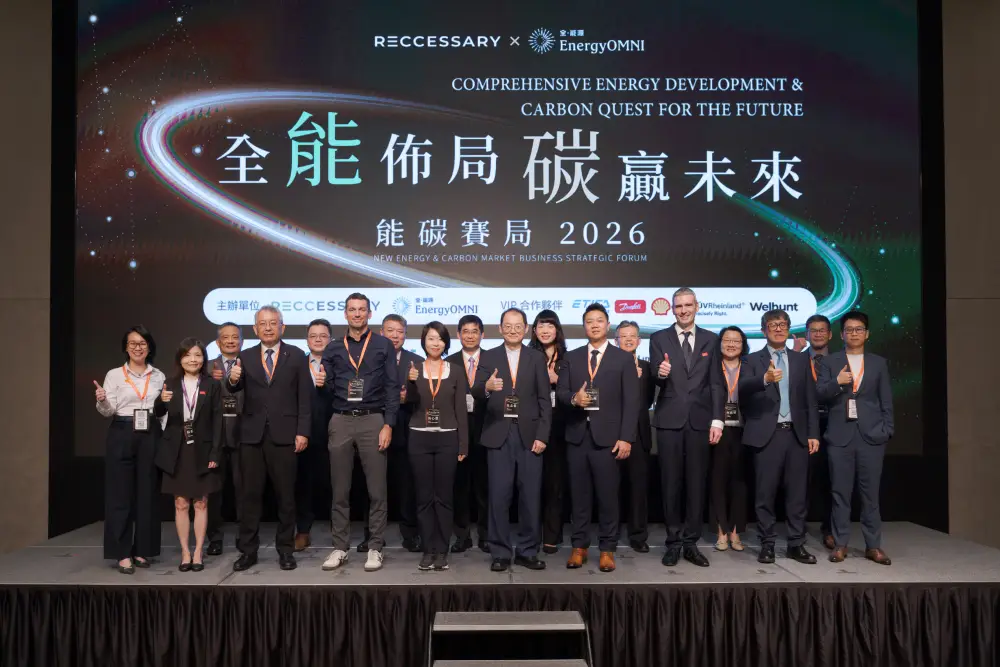
The "2026 Comprehensive Energy Development & Carbon Quest For The Future" was taking place on August 20, bringing together representatives from government, industry, academia and research institutions to focus on energy transition, low-carbon development and the future competitiveness of businesses.[1]
The rapid expansion of AI, the semiconductor industry and data centers is redefining the global competition for energy and net-zero leadership. From reliable low-carbon power and renewable energy development to sustainability disclosure, transition finance and the commercialization of low-carbon technologies, energy and carbon management have evolved from corporate sustainability concerns into core determinants of operational resilience and capital competitiveness.
EnergyOMNI, an energy and net-zero information platform, and RECCESSARY, a new energy and carbon market information platform, jointly hosted the 2nd "2026 Comprehensive Energy Development & Carbon Quest For The Future" Forum (「全能佈局・碳贏未來」論壇) from August 20 to 21. The event brought together government officials, international representatives, energy and technology companies, financial institutions and 3rd-party verification organizations to examine the new wave of transformation challenges facing businesses in the AI era, spanning the entire spectrum from energy supply to capital markets.
EnergyOMNI's founder, Xin-En (Joi) Wu (吳心恩), stated that the company has consistently focused on integrating energy information across various disciplines and platforms. EnergyOMNI conducts independent research on critical issues while providing perspectives that are distinct from those in other media outlets. As EnergyOMNI enters its 4th year, Wu emphasized that the number "4" symbolizes the completeness and stability created by the 4 directions (East, West, North, South) and 4 seasons (which represent the whole year). She further expressed her hope that EnergyOMNI will continue to be a stabilizing force in the industry, fostering connections across sectors and expanding its influence.
RECCESSARY founder, Kung-Hui (Jason) Huang (黃公暉), said the "Comprehensive Energy Development & Carbon Quest For The Future" forum series is committed to bringing together perspectives from different fields. The value of the forum lies not only in discussions of key issues, but also in serving as a platform for facilitating concrete collaboration. Companies that successfully identify partners, generate orders, or close deals through the forum will achieve the forum's most significant and impactful outcome.
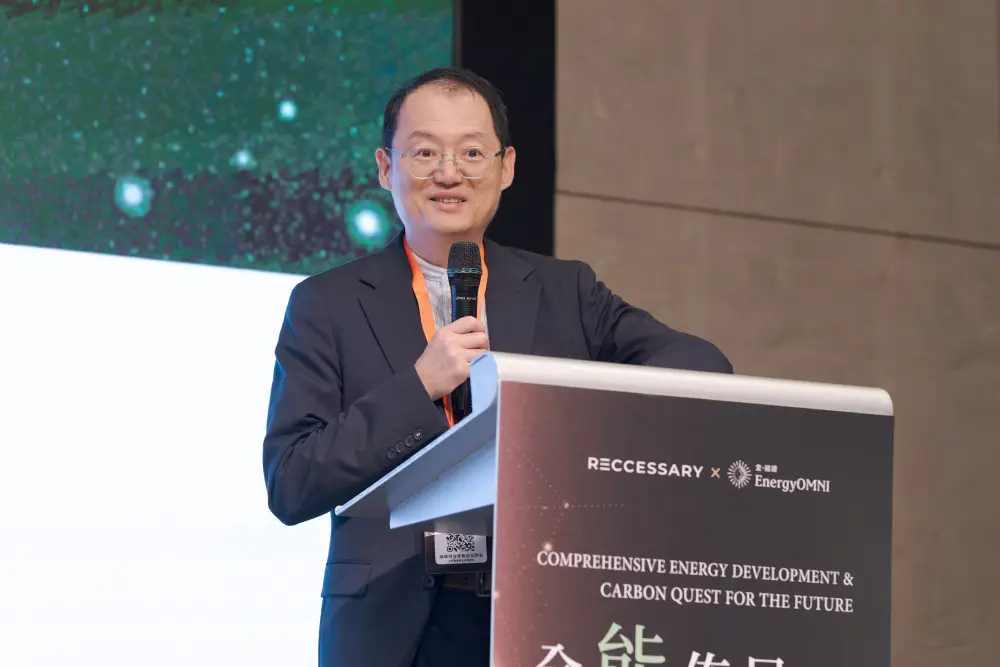
Director-General of the Energy Administration, Chih-Wei Wu, delivers remarks at the event.
AI Drives Up Power Demand: Energy Competition Shifts from "Having Power" to "Reliable Low-Carbon Power"
Chih-Wei Wu (吳志偉), Deputy Director General of Energy Administration, MOEA, said green power has become an important determinant of industrial competitiveness. Taiwan is not only a major global supplier of equipment for AI infrastructure, but must also build its own AI infrastructure, meaning demand for green power and pressure on electricity supply will continue to rise. The government will continue promoting offshore wind and solar PV while helping the private sector overcome development barriers through interdepartmental coordination, regulatory improvements and the design of viable business models.
Joel Derbyshire, Director of Trade and Investment at the British Office, said the energy transition and AI revolution are reshaping global industries at the same time. While AI is rapidly driving up electricity demand, it is also further linking energy security, net-zero targets and industrial competitiveness. Against this backdrop, no single perspective is sufficient to support decision-making. Only by integrating policy, technology, capital and industry perspectives can the true risks and opportunities of the transition be fully understood. The UK has extensive experience in offshore wind, smart grids and green finance, while Taiwan has strengths in semiconductors, offshore wind and digital transformation. He expressed hope that closer UK-Taiwan cooperation would jointly enhance energy security, advance net-zero goals and foster next-generation innovation.
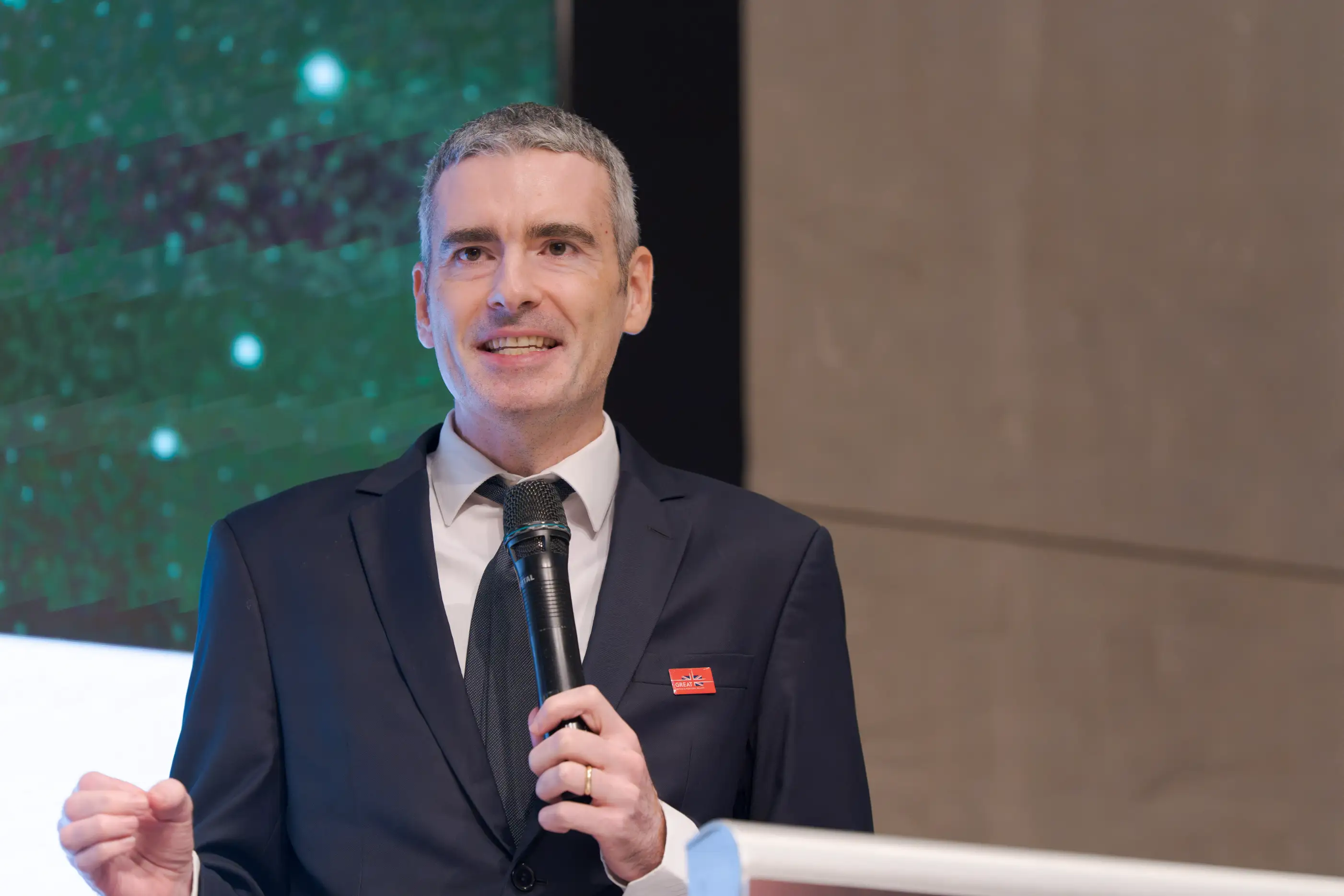
Joel Derbyshire, Director of Trade and Investment at the British Office, delivered the opening remarks on Day 1 of the forum.
Chia-Chin Tsai (蔡佳晋), General Manager of Ina Energy (寶晶能源), stated the rapidly increasing power density of AI servers means AI Data Center (AIDC) require more than simply electricity but need "Firm Power." Companies will have to consider capacity, reliability, scalability, carbon intensity and power delivery schedules simultaneously. The timing, location, quality and carbon intensity of energy supplies will also influence site selection for data centers and high-tech industries.
The growing demand for green power driven by AI is also placing greater emphasis on offshore wind's engineering execution capabilities. Kuo-Cheng (Robert) Tseng (曾國正), Chairman of CSBC-DEME Wind Engineering (CDWE), said Taiwan's offshore wind industry is expected to enter a development scale of 2 GW per year, but construction vessels, marine engineering teams, specialized personnel and port infrastructure all face challenges. As Taiwan, Japan, South Korea and Europe compete simultaneously for engineering resources, the government needs to reduce the risk of supply chain and construction-resource bottlenecks through project scheduling and engineering integration.
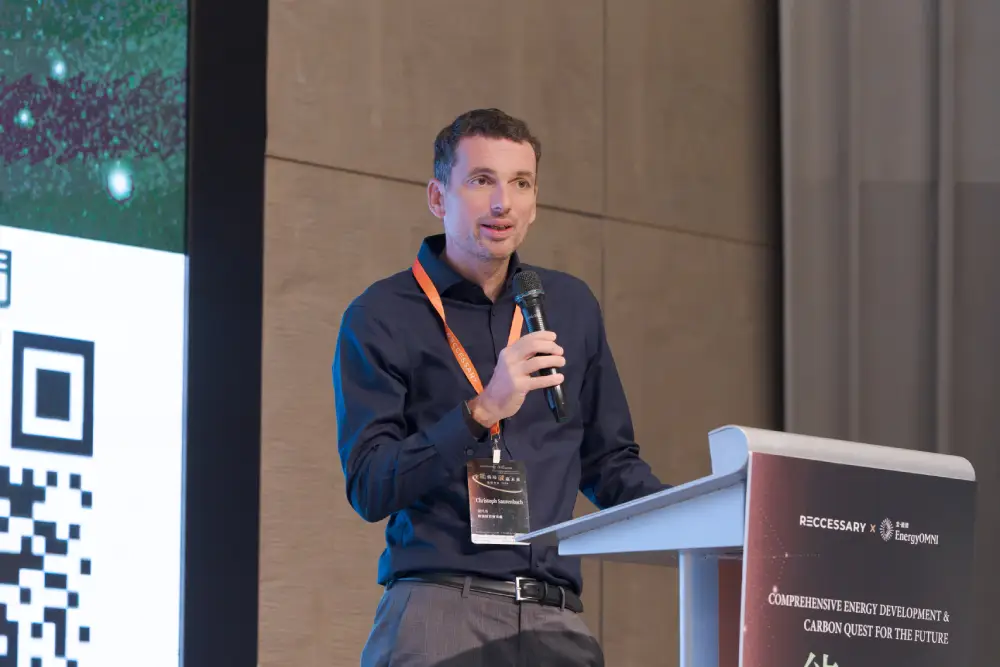
Head of the European Economic and Trade Office, Christoph Saurenbach, delivers a keynote speech at the event, discussing prospects for Taiwan-EU cooperation in renewable energy and the semiconductor industry.
Kuo-Lun (Kevin) Wu (吳國綸), APAC Director at OEG Renewables, shared the challenges facing Taiwan's offshore wind market in terms of engineering continuity and resource allocation from the perspective of an international marine energy services provider. He asserted that project continuity, policy predictability, and the capacity of vessels, engineering teams, and supply chains to ensure long-term participation are essential for sustaining market competitiveness.
Chun-li Lee (李君禮), Honorary Consultant of ICCT (義大利商會) and moderator of the panel discussion, noted that corporate low-carbon competitiveness depends not only on access to green electricity, but also on whether the engineering, supply chains and infrastructure behind it have the capacity to provide long-term support. As AI-driven electricity demand grows alongside the energy transition, the ability to execute and finance offshore wind, marine engineering and renewable energy projects will directly affect whether low-carbon electricity can be delivered reliably.
Chun-Hsing (Jonas) Yen (顏君行), Manager of Wind Energy and Carbon Service Department at TÜV Rheinland (德國萊因), stated that renewable energy projects involve substantial capital investment, while 3rd-party Technology Due Diligence (TDD) can identify risks related to power generation, equipment reliability, grid connection and O&M. This can improve project bankability and alleviate concerns among banks and investors.
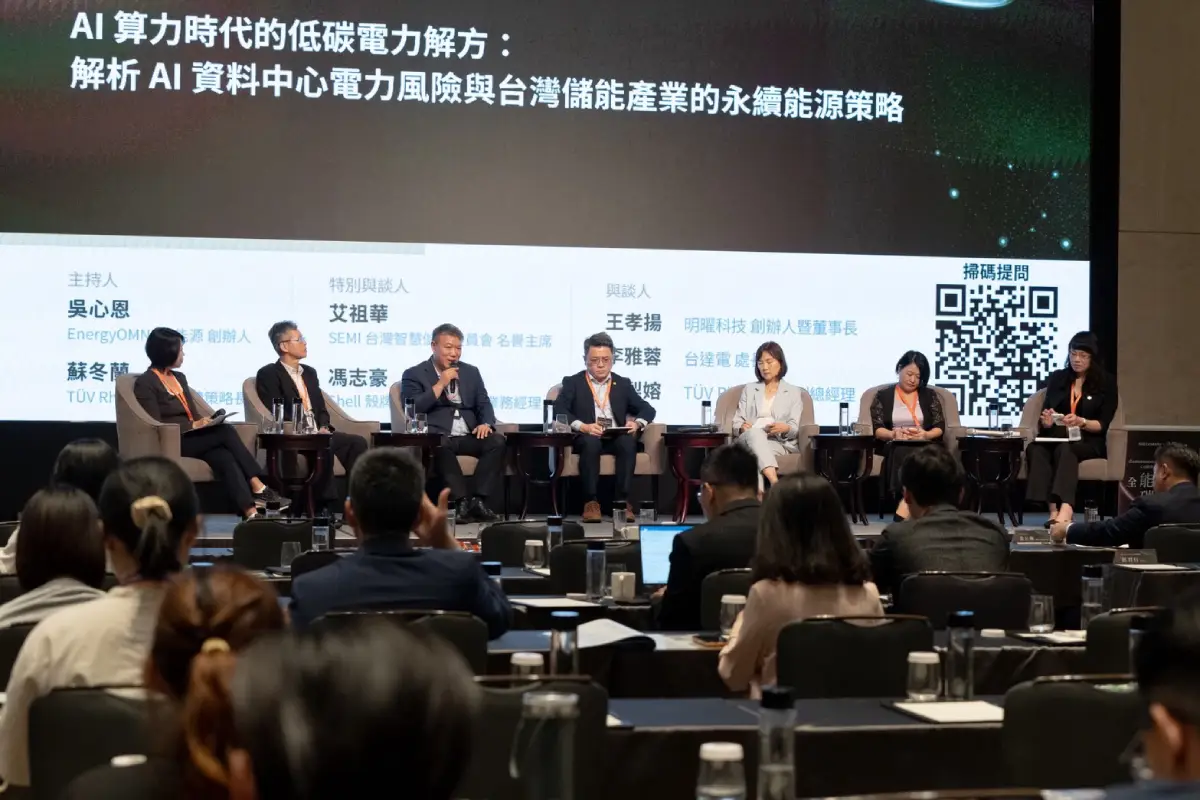
The Day 1 of the forum focuses on the energy transition and evolving energy demand in the AI era, exploring how businesses can develop next-generation energy strategies spanning low-carbon power, energy resilience and electricity demand from AI data centers.
Meanwhile, AIDC energy strategies are shifting from annual total-volume matching under RE100 toward the more stringent standard of "24/7 carbon-free energy matching." Chee-Hoe Fang (馮志豪), Strategic Alliance Business Manager at Shell (殼牌), said that AI data centers must simultaneously address the "Energy Trilemma" of energy security, affordability and environmental sustainability.
Joanna Lean, General Manager of New Business Development at Shell, cited Shell's collaboration with Google in the UK as an example of how companies are beginning to use energy aggregation to bring low-carbon electricity closer to actual consumption periods.
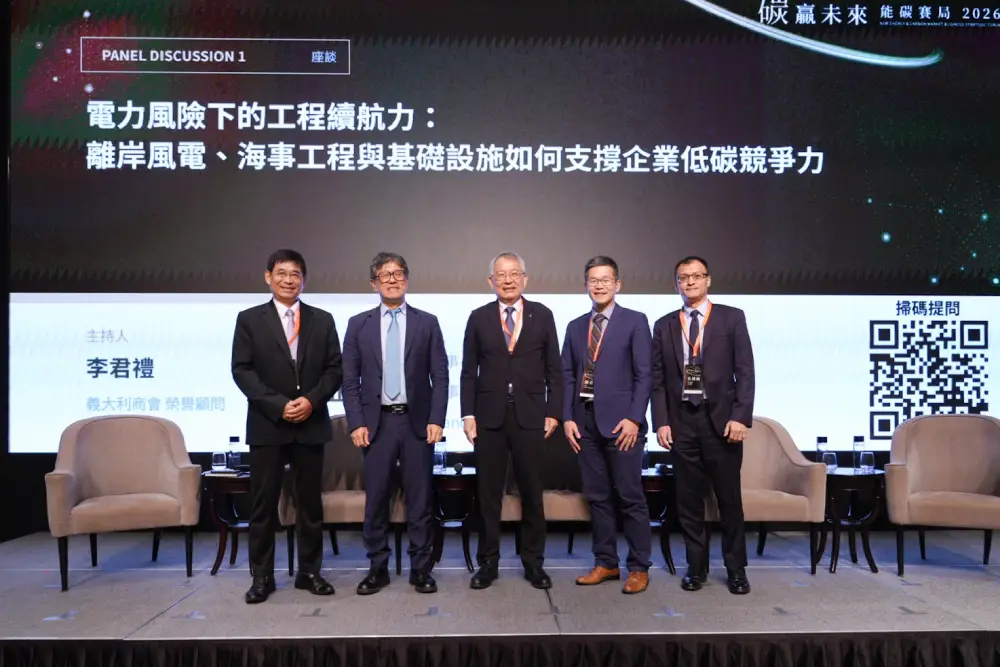
(From left to right) Chun-li Lee, Honorary Consultant of ICCT|Chia-Chin Tsai, General Manager of Ina Energy|Robert Tseng, Chairman of CDWE|Jonas Yen, Manager of Wind Energy and Carbon Service Department at TÜV Rheinland|Kevin Wu, APAC Director at OEG Renewables
Ya-Jung (Sunny) Lee (李雅蓉), Director of Strategic Marketing in Energy Infrastructure Business Group at Delta Electronics (台達電), said that an increasing number of regions are requiring AIDCs to "Bring Your Own Power," further increasing the importance of microgrids, energy storage and diversified distributed energy resources.
Hsiao-Yang (Gavin) Wang (王孝揚) , Founder and Chairman of ETICA Battery (明曜科技), also expressed that as GPU power consumption rises, 800V high-voltage direct current (HVDC) will become an important direction for next-generation data center power distribution. Integrating HVDC with UPS energy storage and microgrids can reduce conversion losses and enhance energy flexibility.
Tsu-Hua Ai (艾祖華), Honorary Chair of the SEMI Taiwan Smart Energy Storage Committee (SEMI 智慧儲能委員會), said that from a power-system perspective that as the share of renewable energy and AI-driven electricity demand both increase, energy storage and microgrids will play an increasingly important role in stabilizing the power grid. Beyond technological integration, the continued improvement of ancillary-service mechanisms and electricity market structures will also affect the scale of energy storage investment and deployment.
Lily Liao (廖梨嫆), Deputy General Manager, Solar and Commercial & Industrial Products Service Division, TÜV Rheinland, warned that as AIDC technologies advance rapidly, Taiwan's supply chain must simultaneously keep pace with standards including TIA-942, ISO/IEC 22237 and EN 50600, as well as sustainability requirements such as PUE, REF and WUE, in order to reduce market-entry and compliance risks when expanding overseas.
Sammy Su (蘇冬蘭), Head of Sustainability Strategy at TÜV Rheinland and co-moderator of the panel discussion, emphasized that the landscape of competition among AIDC has transformed. It is no longer sufficient to focus solely on computing power and equipment; the ability to establish a robust integrated energy architecture that balances reliability, cost, and resilience is now paramount. As AIDC expand rapidly, companies must proactively integrate energy storage, renewable energy, and backup systems. Furthermore, they must prioritize energy efficiency, cybersecurity, power supply stability, and regulatory compliance within a comprehensive risk management framework. For investors, the critical factor moving forward will be not just the sophistication of technologies, but their quantifiable, verifiable capabilities that can be effectively translated into sustainable investment value.
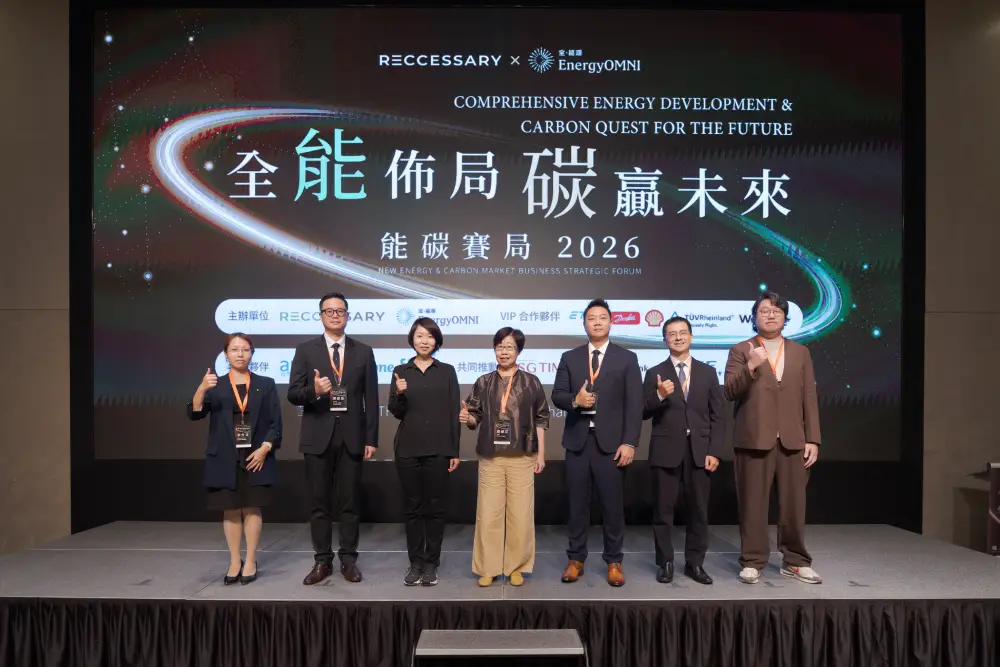
Day 2 centers on corporate net-zero transition and carbon governance, examining key strategies for building net-zero competitiveness through sustainability disclosures, green finance and low-carbon business models.[2]
Sustainability Shifts from "Commitment" to "Accountability" as Carbon Data Begins to Influence Capital Allocation
While the first day of the forum focused on how companies can secure energy, the focus on the 2nd morning shifted toward how companies can demonstrate that they are genuinely undergoing transformation.
Eugene Chien (簡又新), Chairman of the Taiwan Institute for Sustainable Energy and Ambassador-at-Large, said in his address on the second day of the forum that the global net-zero transition has evolved from a commitment into a competitive race. Companies are no longer facing isolated decarbonization initiatives, but rather systemic challenges involving governance, data, energy, supply chains, finance and technology.
Chien explained the concept of a "comprehensive strategy" through "3 meanings, 5 areas of planning and 3 outcomes." Companies must pursue a comprehensive energy transition, upgrade their capabilities across the board and foster ecosystem-wide collaboration, while simultaneously developing strategies across 5 areas: governance, data, decarbonization, finance and technology. This approach would move sustainability disclosures into business decision-making, shift decarbonization from isolated actions toward long-term transformation capabilities, and ultimately help Taiwan's supply chains become globally trusted low-carbon value chains. He stressed that the key to future competitiveness will not simply be who declares net zero first, but who can truly integrate governance, data, decarbonization, finance and technology to turn decarbonization pressures into drivers of innovation and competitiveness.
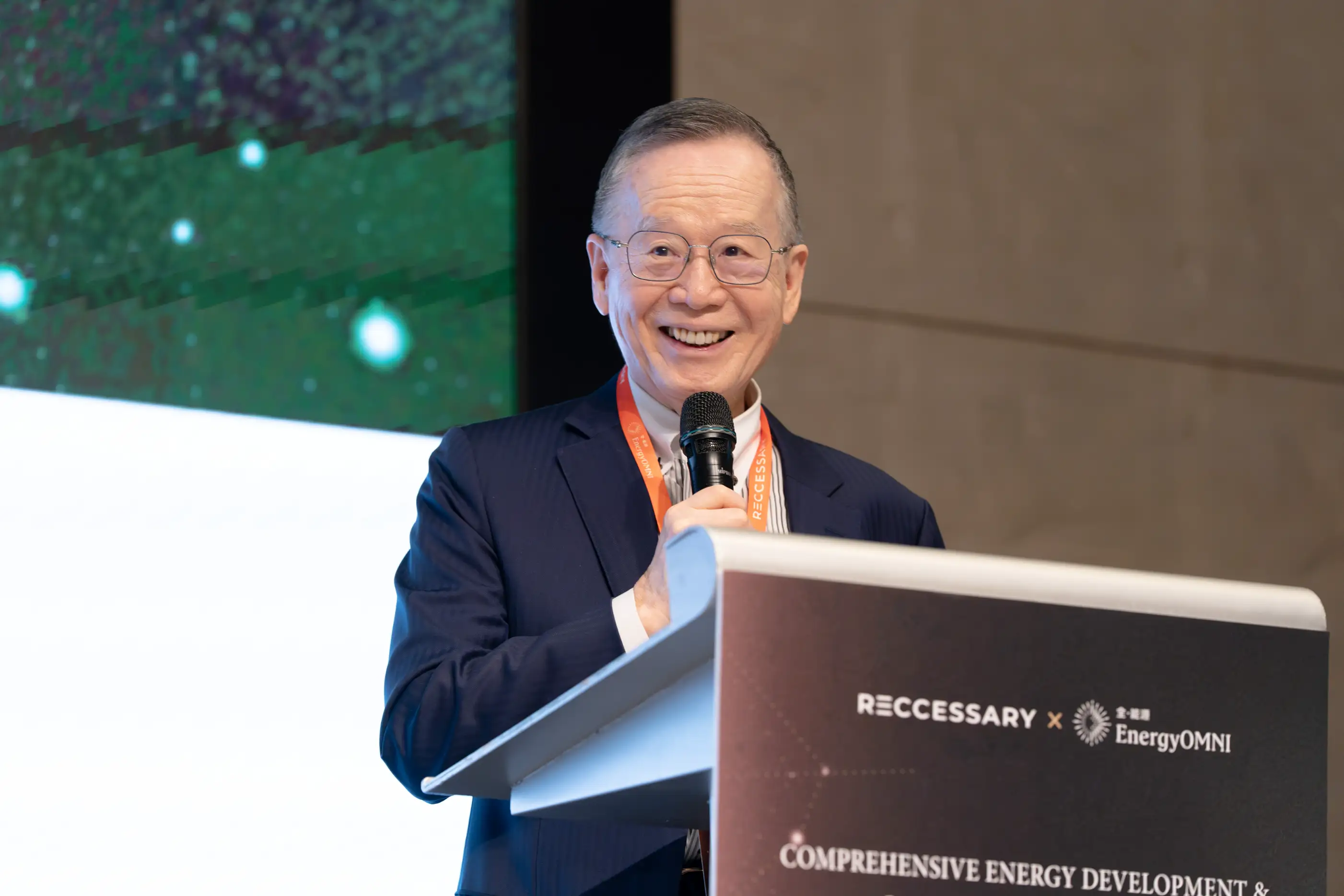
Eugene Chien, Chairman of TAISE and Ambassador-at-Large, delivered the opening remarks on the forum's 2nd day
Gennie Yen (嚴德芬), Founder of CSRone (CSRone 永續智庫), said energy and carbon have evolved from areas that could provide companies with a competitive advantage into an unavoidable competitive arena. As carbon costs, electricity risks and capital screening pressures rise simultaneously, companies seeking to outperform cannot focus solely on their own capabilities and conditions. Instead, they must understand broader market and industry developments and fully integrate energy and carbon management into business decision-making.
Chien-Yu Chen (陳建佑), Executive Vice President of CSRone, said global sustainability frameworks are shifting from target-setting toward action and impact measurement. As frameworks including SBTi, the GHG Protocol and ISO standards continue to evolve, carbon data is no longer simply information disclosed in sustainability reports. It will increasingly influence corporate capital allocation, supply chain eligibility and market competitiveness.
Taiwanese listed companies will also gradually align with IFRS S1 and S2. Bryan Lin (林哲仰), Senior Associate Vice President, Sustainability Innovation and Development Department, Nan Shan Life Insurance (南山人壽), said that sustainability information will become a common corporate language used by boards of directors, shareholders, management, analysts and regulators. Companies, however, will also face practical challenges involving data integration, materiality assessment and disclosure timelines.
Sustainability disclosure is becoming increasingly linked to capital markets. Cathy Lee (李介文), Senior Executive Vice President of Deloitte (勤業眾信), indicated that financial policy is shifting from "green finance" toward "transition finance." In the future, even industries with high carbon emissions, like cement and chemicals, may receive financial support if they provide credible transition plans. These plans should include clear timelines, emissions reduction targets, funding sources, and implementation methods. In other words, merely stating a commitment to achieve net-zero emissions is no longer adequate; companies must develop measurable, trackable, and verifiable transition pathways.
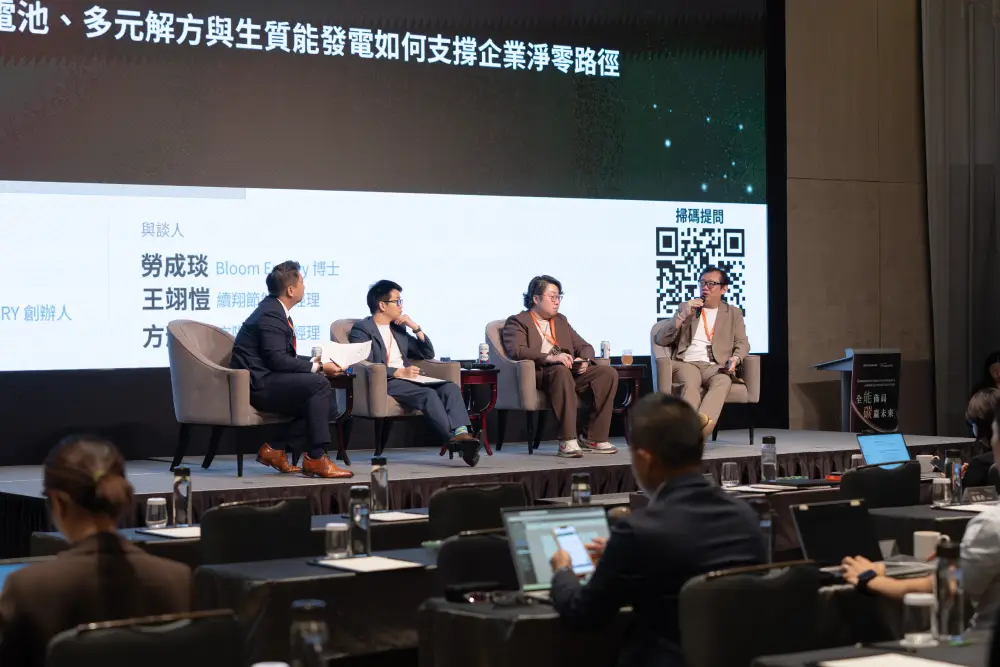
The 2nd day also explores low-carbon technologies and business development, covering diverse low-carbon energy sources, CCUS, low-carbon fuels and carbon removal, while examining how decarbonization initiatives can create new opportunities for corporate low-carbon transformation and sustainable development.
Beyond Wind and Solar: The Next Low-Carbon Energy Battle is About Costs and Business Models
As electricity demand increases, corporate energy options are also expanding beyond conventional wind and solar power. The 2nd afternoon of the forum focused on fuel cells, energy efficiency, biogas, CCUS, Sustainable Aviation Fuel (SAF) and carbon credits. The central question is no longer simply whether a technology can reduce emissions, but whether policy, costs and market demand can come together to create sustainable business models.
Cheng-Yen Lao (勞成琰), PhD., Bloom Energy, stated that fuel cells can provide stable power generation at the point of consumption regardless of weather conditions and can operate in island mode, making them a distributed energy option for power-intensive industries such as data centers and semiconductors.
Yi-Kai Wang (王翊愷), General Manager of EcoSoar Energy (續翔節能) Service and VP of Customer Development at Anneal Energy (艾涅爾電力), stressed that "The greenest electricity is the electricity that is saved." Companies should first reduce demand through equipment upgrades, smart controls and energy management before procuring green power.
Yao-Hua Fang (方耀華), General Manager of Universe Circular Technology (宇陽能源), said that biogas can convert agricultural, livestock and organic waste into dispatchable renewable energy, but challenges remain in securing feedstock, coordinating across government agencies and achieving commercial scale.
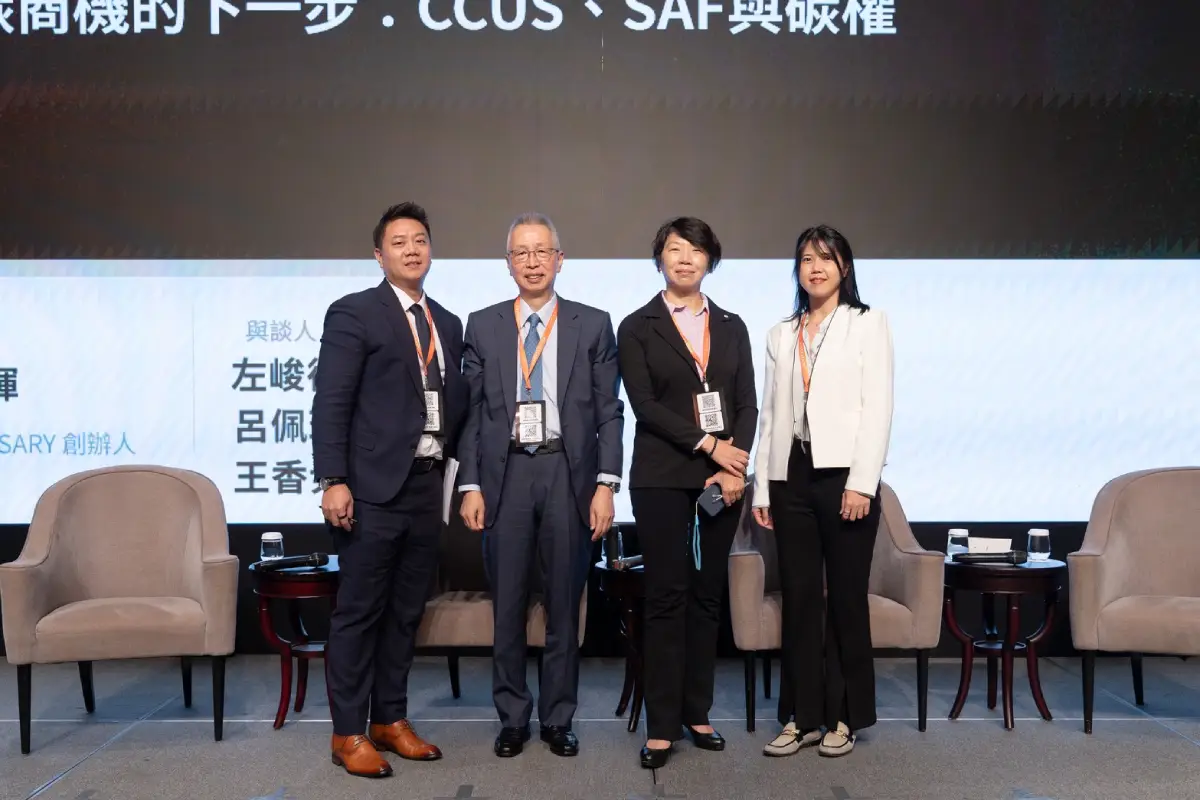
(From left to right) Jason Huang, Founder of RECCESSARY|Chun-Te Tso, Vice President of the Taiwan Institute of TIER|Pei-Ling Lu, Chief Sustainability Officer of STARLUX Airlines|Hsiang-Yin Wang, Deputy Manager of Sustainability and Carbon Trading at Welhunt
As low-carbon technologies move toward commercialization, the question of who bears the cost of the transition has also become critical. Chun-Te Tso (左峻德), Vice President of the Taiwan Institute of Economic Research (TIER), said CCUS could remain commercially attractive to technology companies with significant decarbonization needs if it can provide stable low-carbon power around the clock.
Pei-Ling Lu (呂佩玲), Chief Sustainability Officer of STARLUX Airlines (星宇航空) further expressed that SAF remains expensive and in limited supply, making it difficult for the aviation industry to absorb the entire cost through a single segment; costs must instead be shared across the supply chain. Carbon credits, meanwhile, are gradually becoming a transition cost for companies seeking international orders and compliance with market requirements.
From Green Power Procurement to Integrated Capabilities in "Energy, Carbon and Capital"
The common trend emerging from the 2-day forum is that corporate energy and net-zero strategies are entering a new stage.
In the AI era, companies must go beyond merely stating, "How much green power have we purchased?" They must ensure that they can secure reliable, low-carbon energy consistently. It is essential to convert decarbonization commitments into actionable, credible data and investment strategies. Furthermore, companies need to establish whether emerging low-carbon technologies can create cost structures and business models that the market demands and is ready to adopt.
The energy transition now spans a wide range of areas, including renewable energy development, marine engineering, microgrids, data centers, sustainability disclosure, transition finance, CCUS, and SAF. It is no longer an issue confined to a single technology or department. Instead, it has evolved into a comprehensive competition focused on the ability to integrate energy supply, carbon management, and capital allocation.
Note:
[1] Front row from left to right:Joanna Lean, General Manager of New Business Development at Shell|Karen Su, Senior Commercial Officer at British Office|Robert Tseng, Chairman of CDWE|Christoph Saurenbach, Deputy Head of Office, European Economic and Trade Office|Joi Wu, Founder of EnergyOMNI|Chih-Wei Wu, Deputy Director General of Energy Administration|Jason Huang, Founder of RECCESSARY|Joel Derbyshire, Director of Trade and Investment at British Office|Chia-Chin Tsai, General Manager of Ina Energy|Cheng-Yen Lao, PhD., Bloom Energy
Second row from left to right: Andrea Sing-Ying Lee, President of ICCT|Chee-Hoe Fang, Strategic Alliance Business Manager at Shell|Gavin Wang, Founder and Chairman of ETICA Battery|Chun-li Lee, Honorary Consultant of ICCT|Sammy Su, Head of Sustainability Strategy at TÜV Rheinland|Tsu-Hua Ai, Honorary Chair of the SEMI Taiwan Smart Energy Storage Committee|Joanne Ho, Chief Sustainability Officer at CTCI|Jonas Yen, Manager of Wind Energy and Carbon Service Department at TÜV Rheinland
[2] From left to right: Cathy Lee, Senior Executive Vice President of Deloitte|Chien-Yu Chen, Executive Vice President of CSRone|Joi Wu, Founder of EnergyOMNI|Gennie Yen, Founder of CSRone|Jason Huang, Founder of RECCESSARY|Bryan Lin, Senior Associate Vice President, Sustainability Innovation and Development Department at Nan Shan Life Insurance|Yi-Kai Wang, General Manager of EcoSoar Energy
Content and image source: EnergyOMNI
Compilation & Ttranslation: EnergyOMNI
