

Building Kaohsiung Port's Giant Carrying the Past into the Future: Setting a New Milestone for Taiwan's Energy Landscape
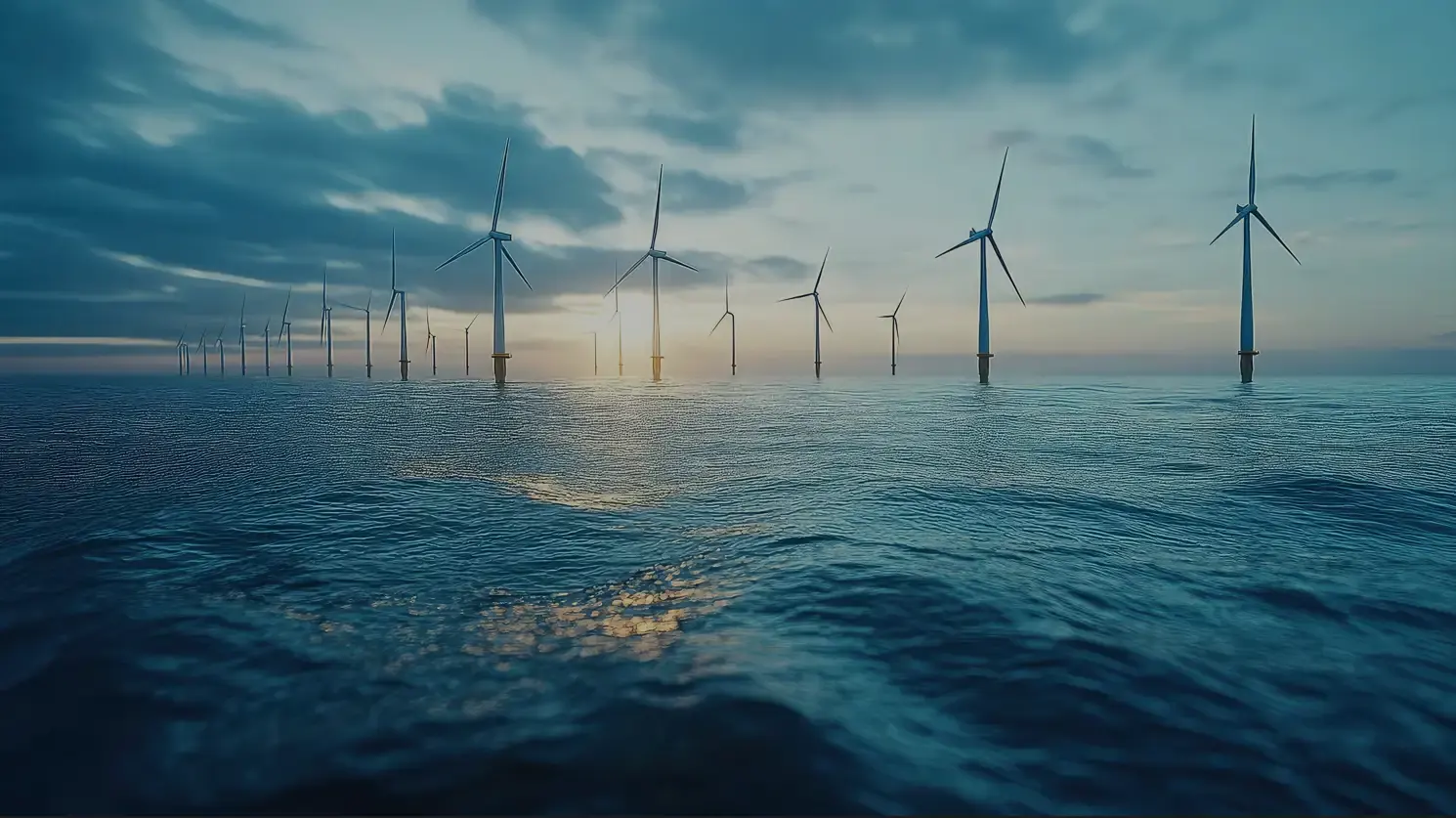
Building Kaohsiung Port's Giant Carrying the Past into the Future: Setting a New Milestone for Taiwan's Energy Landscape
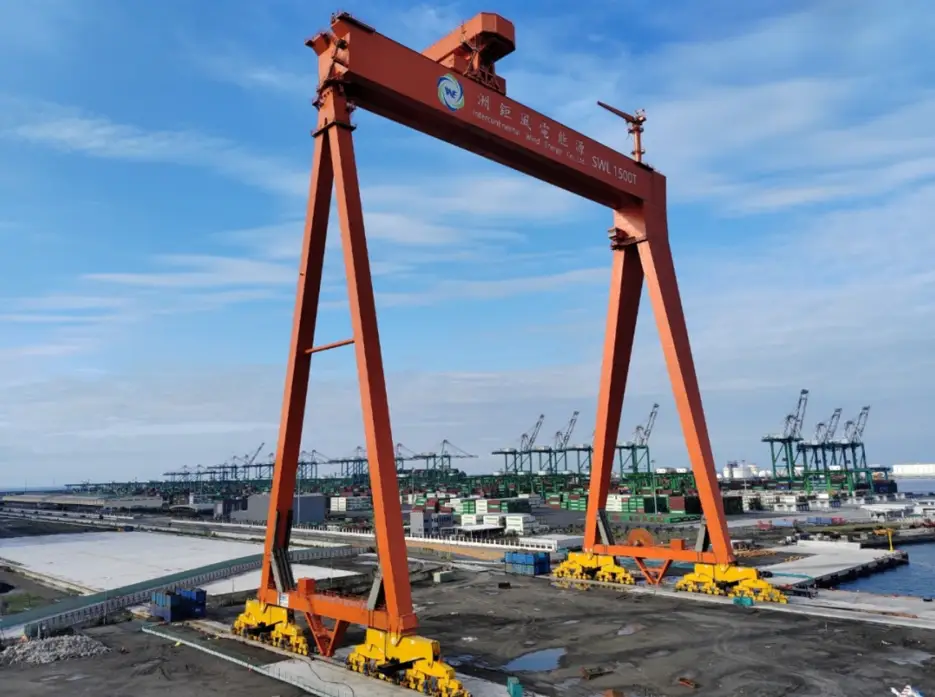
In the harbor of Kaohsiung, an orange-red behemoth stands at the water's edge—Taiwan's largest 1,500-ton gantry crane—silhouetted against the southern skyline. Built by Intercontinental Wind Energy Co., Ltd. (IWE), this massive structure is more than an engineering accomplishment; it is a symbol of Taiwan's industrial transformation. Anchored in Kaohsiung, Intercontinental Wind Energy is expanding from fixed-bottom offshore wind to floating structures and broader energy applications, unlocking Taiwan's diverse energy potential and shaping a cross-generational energy industry landscape. Leading the team behind this achievement is Wenlin Chiang, IWE's Vice President, a female executive with fifteen years of deep experience across engineering and the energy sector.
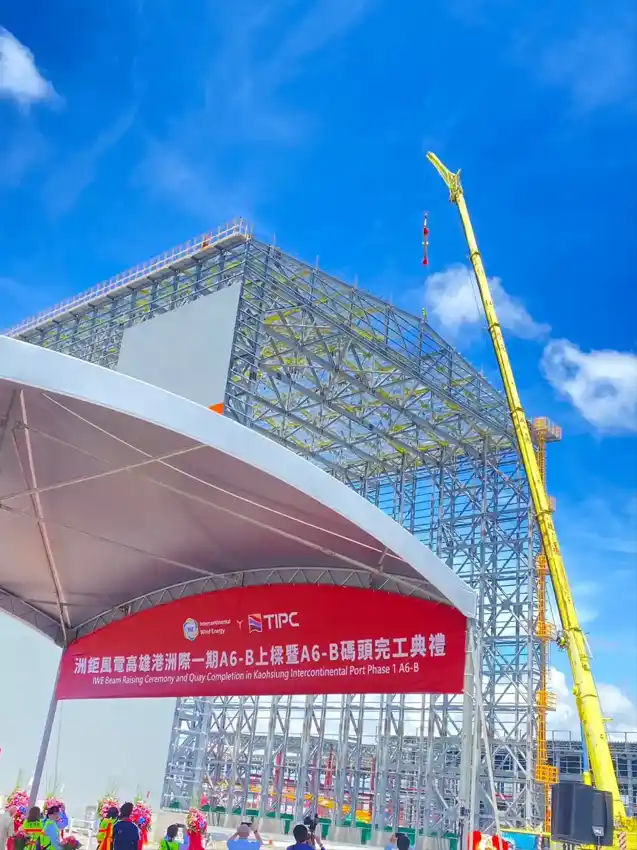 Anchored in Kaohsiung, Intercontinental Wind Energy is expanding from fixed-bottom offshore wind to floating structures and broader energy applications, unlocking Taiwan's diverse energy potential and shaping a cross-generational energy industry landscape.
"Intercontinental"—a Name Carrying Global Ambition
"'Intercontinental' reflects our vision: rooted in Taiwan, oriented toward the global market. 'The Chinese Character 鉅' represents scale, ambition, and depth," Chiang explained.
IWE's strategic focus lies in offshore wind foundations and floating structures. The company's goal is clear: first, to establish itself as the most trusted supplier in the Asia–Pacific market by delivering "reliable quality and on-time performance"; then, to expand its service portfolio and build an integrated energy value chain.
To achieve this, IWE partners with DNV to accelerate technical learning and manufacturing optimization, ensuring that product quality and delivery efficiency reach international standards. Long-term collaboration with TÜV Rheinland supports a robust quality, environmental, and occupational-safety system, fostering a safe and harmonious working environment. IWE's approach integrates European design and manufacturing standards with the cost-efficiency strengths of Asian supply chains, enabling the company to compete globally with dual advantages. Kaohsiung Port's strategic location further reinforces this positioning, enabling direct linkage with international projects and strengthening the company's vision of becoming an export hub for offshore wind in the Asia–Pacific region.
Fully aware that offshore wind is a cornerstone of Taiwan's energy transition, IWE has also invested heavily in smart manufacturing and digitalized management. AI-enabled processes, automation, and data systems are being introduced to preserve institutional knowledge for decades to come. "This is not just an upgrade of equipment. It is about creating a future where young Taiwanese talent can thrive in heavy industries and generate new value," Chiang emphasized. For her, transformation is not merely a corporate strategy—it is a cultural shift for the entire industry.
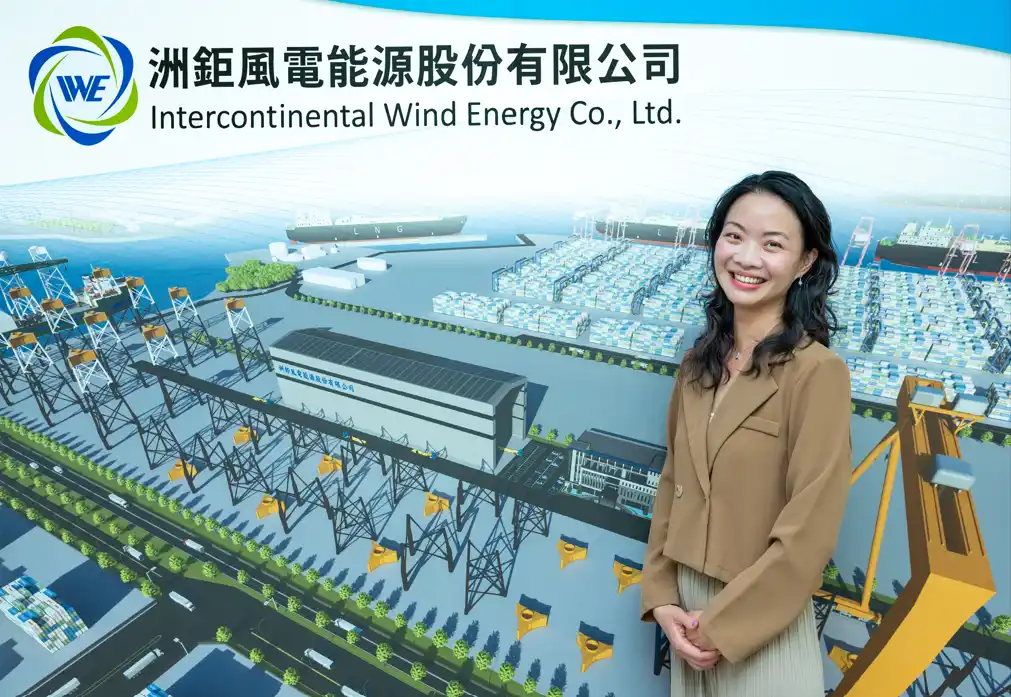
 Wenlin Chiang, Vice President of Intercontinental Wind Energy (IWE)
A6-B Terminal: The Birthplace of Kaohsiung's Giant
To realize this vision, IWE invested NT$5 billion to develop approximately 20 hectares of port-side industrial land at Kaohsiung Port. The site hosts a 1,500-ton rail-mounted gantry crane, a 200-meter fabrication facility, and a deep-water heavy-lift quay, making the company one of the few in Asia capable of completing full processes within the port area.
The orange-red structure—rising 140 meters high with a 103-meter span—is among the largest cranes in Asia and one of the few of its class globally. "From planning to commissioning in less than two years—this was a miracle delivered by the entire team," Chiang said proudly. "Our crane is not just equipment; it's a milestone. We spent tens of millions more purely to enhance safety. As long as it makes the structure safer, we will invest."
The giant crane has since become a new landmark of Kaohsiung.
This investment has also driven breakthroughs in production efficiency. The port-based integrated assembly model—fabricate, assemble, and load-out onsite—reduces logistics and installation time for large offshore foundations by around 30%, substantially improving delivery reliability. Kaohsiung's favorable climate further strengthens the feasibility of large outdoor assembly. Chiang noted that IWE's ambition is not only to build a factory, but to create a platform for industrial innovation. Future plans include deploying data-driven and AI-enhanced management systems to standardize production and quality, cultivating local managerial talent, and ensuring the long-term continuity of knowledge and technical capabilities.
"We are creating an industry, not just a company. A6-B is a creative hub—a lighthouse for partners who share a vision for Taiwan. Anyone with ambition for Taiwan's industrial future should be able to utilize the resources of this harbor," Chiang said.
 Chiang emphasized that Intercontinental Wind Energy aims to build an industry that endures across generations, not merely pursue corporate growth.
International Standards and a Culture of Quality
IWE has obtained ISO 9001, 14001, and 45001 certifications, affirming the company's international qualifications in quality management, environmental practices, and occupational health and safety. These certifications serve as a passport to international tenders—and as a core part of corporate culture.
"Safety awareness is the foundation. Only when people truly care—when 'I care' becomes instinctive—can safety be implemented," Chiang stressed. IWE is integrating real-time monitoring systems and AI-based management to ensure every production step meets rigorous standards. Regular training programs extend safety and environmental consciousness throughout the supply chain. "Quality and safety are not just standards; they form a culture. Every structure we build will one day support an offshore wind farm—and underpin our nation's energy security," she said.
Turning Wind into a Blessing for Taiwan
When discussing Taiwan's energy prospects, Chiang's tone grew firm: "Wind is a gift from nature to Taiwan." While the island lacks fossil fuel resources, it possesses world-class offshore wind potential. "Wind power is a critical pillar of Taiwan's energy stability. Regardless of external uncertainties, this pathway will continue to advance."
Beyond offshore wind, IWE is also investing in Sustainable Aviation Fuel (SAF). "Our project in Hawaii has already entered commercial production. We achieved the transition from laboratory to mass production in only two years." This accomplishment highlights Taiwan's innovative capabilities and marks an important milestone within the global energy transition.
Chiang shared that IWE is actively pursuing market-driven and international strategies. The company maintains close partnerships with major energy developers, leveraging equity cooperation and long-term supply agreements to enhance financial stability and market resilience. IWE also seeks partners who can expand new energy applications in port areas, ensuring long-term flexibility and innovation potential across its base.
In response to global trade restrictions and price pressures, IWE adopts diversified market strategies, collaborating with domestic and international partners to expand throughout Asia. Digitalized production and professionalized workflows are used to enhance efficiency, reduce costs, and strengthen the company's leadership across the APAC energy sector.
Looking ahead, Taiwan is moving toward its 2035 goal of 15GW offshore wind capacity. IWE will continue investing in standardization, talent development, and international collaboration to supply high-quality offshore foundations. Leveraging the A6-B platform, IWE plans to expand into floating offshore wind, energy storage, hydrogen, and other emerging sectors, supporting a diversified and sustainable energy ecosystem. "Offshore energy is a 20- to 25-year lifecycle industry. Meanwhile, new energy technologies are emerging. Our mission is to build an industry that spans generations—not just a company's growth," Chiang said firmly.
Soft Leadership: Strength, Balance, and a Woman's Perspective
In a male-dominated engineering world, Chiang has redefined leadership through soft power. "Women have many advantages in engineering. They are detail-oriented, willing to dive deep into problems, and have less ego to overcome. They can be direct, genuine, and solution-focused."
"Our corporate culture is very different from conventional manufacturing. We achieved gender balance quite early," she said with a smile. With the advancement of AI and robotics, Chiang believes heavy industries will shift from physical strength to smart management, making empathy, coordination, and communication essential attributes. "We want communication to replace confrontation. Integration instead of rivalry. That's how things get done—and how industries move forward."
"What we are building goes beyond corporate growth. It is about leaving wisdom, choices, and pathways for the next generation," she concluded—soft-spoken yet resolute.
 With the advancement of AI and robotics, Chiang believes heavy industries will shift from physical strength to smart management, making empathy, coordination, and communication essential attributes.
More related articles
