

The Last Mile of Resilient Communications: Why "Safe Energy Storage" Has Become the Lifeline of Taiwan's 5G Base Stations

The Last Mile of Resilient Communications: Why "Safe Energy Storage" Has Become the Lifeline of Taiwan's 5G Base Stations
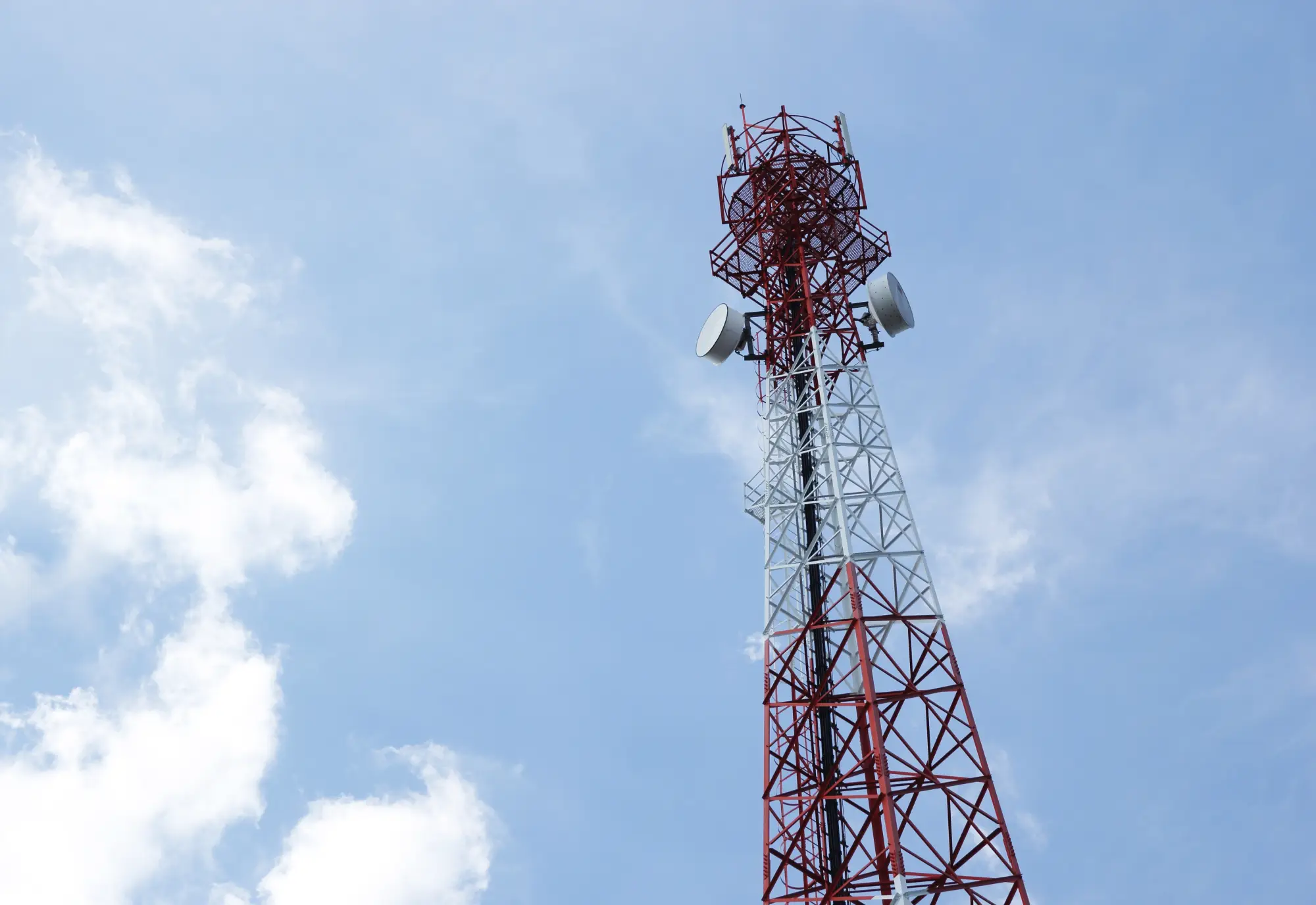
In April 2024, a sudden and powerful earthquake shocked Taiwan. In the few seconds after the shaking stopped, residents in affected areas did not first check their financial losses. Instead, their instinctive reaction was to pick up their phones and confirm that their family members were safe. At that moment, the number of signal bars on a mobile phone became the antidote to panic. Behind that sense of reassurance, however, lies a vast network of telecommunications base stations distributed across Taiwan—from urban streets and residential rooftops to remote mountain communities.
As the deployment of 5G networks approaches a plateau, Taiwan's telecommunications industry is facing an unprecedented dual transformation involving both energy and security. Base stations are no longer simply steel towers transmitting signals. They are increasingly becoming core nodes that support AI computing and the Internet of Things. In this context, energy storage systems are no longer merely backup batteries; they are rapidly evolving into a critical component of national resilience infrastructure. In Taiwan's unique environment, safety has emerged as a non-negotiable bottom line in this transformation.
The Energy Paradox of the 5G Era: Faster, Hotter, and More Energy-Intensive
Each generational leap in telecommunications technology, typically occurring once every decade, brings not only dramatic improvements in data transmission speeds, but also exponential growth in energy consumption. According to statistics, the average power consumption of a single 5G base station is more than three times that of a 4G base station. However, because 5G signals travel shorter distances, achieving the same coverage requires more than three times the number of base stations compared with 4G. As a result, total electricity consumption could increase by more than nine times.
This creates a serious energy paradox. To deliver high-speed communications, base stations must incorporate more electronic components and high-power antennas, which in turn generate greater heat. In Taiwan, summer temperatures often exceed 38°C. Combined with the fact that many base stations are installed on rooftops with limited ventilation or inside enclosed equipment cabinet, batteries frequently operate under prolonged high-temperature stress.
Under such conditions, traditional lead-acid batteries or air-cooled lithium batteries experience not only significantly shortened lifespans, but also a higher risk of internal thermal runaway, which can trigger chain reactions. For telecommunications operators, network outages caused by unstable power supplies can lead to financial losses and damage to brand reputation. Yet fire incidents caused by overheating equipment, which could potentially threaten human lives, represent an even more serious social responsibility and legal risk that operators simply cannot afford to bear.
Taiwan's Urban Challenge: "Invisible Bombs" on Rooftops and Firefighting Difficulties
Taiwan has one of the world's most densely deployed telecommunications networks. This high density is largely a result of urban building characteristics, where a significant number of base stations are installed on apartment rooftops, in dense commercial districts, or above hospitals and medical clinics. This model of "coexisting with communities" has made the safety of base station energy storage systems an extremely sensitive social issue.
If a fire were to occur in a traditional energy storage system installed on a rooftop, firefighters would often face considerable challenges in disaster response. First, accessing water sources on rooftops can be difficult. Second, lithium battery fires involve chemical reactions that can easily backdraft, making them extremely difficult to extinguish completely. For major telecommunications operators, a fire incident would not only lead to compensation liabilities but could also trigger strong opposition from nearby residents and demands for removal or relocation. For base stations, which are difficult to deploy and closely linked to expensive spectrum costs, such risks pose a serious operational threat.
As a result, market attention is increasingly shifting toward new types of solutions. Technologies that have already reached commercial deployment are emerging in both domestic and international markets, including anti propagation technologies designed and immersion cooling technologies.
From "Passive Backup" to "Active Safety": ESG Strategies of Telecom Operators
After establishing a solid foundation of safety and resilience, energy storage systems are now further supporting Taiwan's telecommunications operators in achieving their ESG transformation goals.
1. Achieving Energy Independence through Microgrids
In remote regions or disaster-prone areas, such as the mountainous regions of eastern Taiwan, telecommunications operators are promoting microgrid solutions that combine solar power and energy storage. This approach not only addresses the issue of unstable electricity supply from Taipower but also ensures that, during natural disasters or when roads are blocked, base stations can continue operating independently for at least 72 hours. In such situations, these base stations may become the only communication lifeline for local residents.
2. Peak Shaving, Load Shifting, and the Potential of Virtual Power Plants (VPP)
Telecommunications base stations are among the most stable electricity consumers in Taiwan. Through intelligent energy storage management, base stations can charge batteries during off-peak electricity pricing periods and discharge the stored power for self-consumption during daytime peak demand hours, thereby reducing reliance on the power grid.
In the future, tens of thousands of energy storage systems installed at base stations across Taiwan could be integrated into a VPP. Such a system could assist the grid operator in frequency regulation, enabling the telecommunications sector to evolve from a pure energy consumer into an active supporter of grid stability.
3. Track Record in Energy Efficiency and Carbon Reduction
Energy storage systems equipped with high-efficiency cooling technologies can significantly reduce the energy consumption of the equipment itself by lowering the need for air conditioning. For major telecommunications companies pursuing net-zero emissions targets, this represents one of the most meaningful technological investments in their carbon accounting and sustainability strategies.
Safety: The Ultimate Baseline of Communication Resilience
In Taiwan, energy management for 5G base stations has officially moved beyond the traditional concept of mere power backup. It is now evolving toward a strategic framework centered on operational resilience and system safety.
Facing stringent fire safety regulations in high-density urban environments, as well as the growing risks of thermal runaway driven by extreme climate conditions, technologies such as anti-propagation and immersion cooling are no longer optional enhancements. Instead, they form a critical layer of physical protection for key communication infrastructure.
More importantly, these technologies provide telecommunications operators with a comprehensive solution that eliminates the need to compromise between safety and energy efficiency as they advance their ESG transformation strategies.
Next Feature: From Taiwan's Experience to the Reshaping of the Global Telecom Energy Landscape
Having proven its ability to sustain communication stability within Taiwan's complex environmental conditions, this energy storage technology is now expanding into international markets. Its performance has already been validated in environments characterized by the "triple challenge" of high temperature, high humidity, and heavy dust, drawing increasing attention from global telecommunications leaders.
In the next column of this special series, we will take readers beyond Taiwan's borders to examine the evolving energy storage landscape of the global telecom industry. We will explore how this technology, in collaboration with leading international energy partners, is helping overseas telecom operators address energy shortages—from the extreme temperature fluctuations of North America to the harsh desert environments of the Middle East.
At the same time, we will analyze how the strategic advantage of a non-PRC supply chain positions this technology as a critical driver of security and sustainability in the emerging global green communications revolution.

Justin Chen
A Public Relations Manager in the energy tech industry, Chen specializes in data-driven insights and managing complex issues. Drawing on extensive experience with global semiconductor leaders, he brings a solid foundation in tech PR. His current focus lies in energy storage safety and fostering social trust. He is adept at demystifying technical language, combating green energy disinformation, and crafting communication strategies that integrate geopolitical risks with public interest.
More related articles
