

Japan Revises Offshore Wind Tender Guidelines Strengthening Project Viability and Local Coexistence as Market Matures
Japan Revises Offshore Wind Tender Guidelines Strengthening Project Viability and Local Coexistence as Market Matures
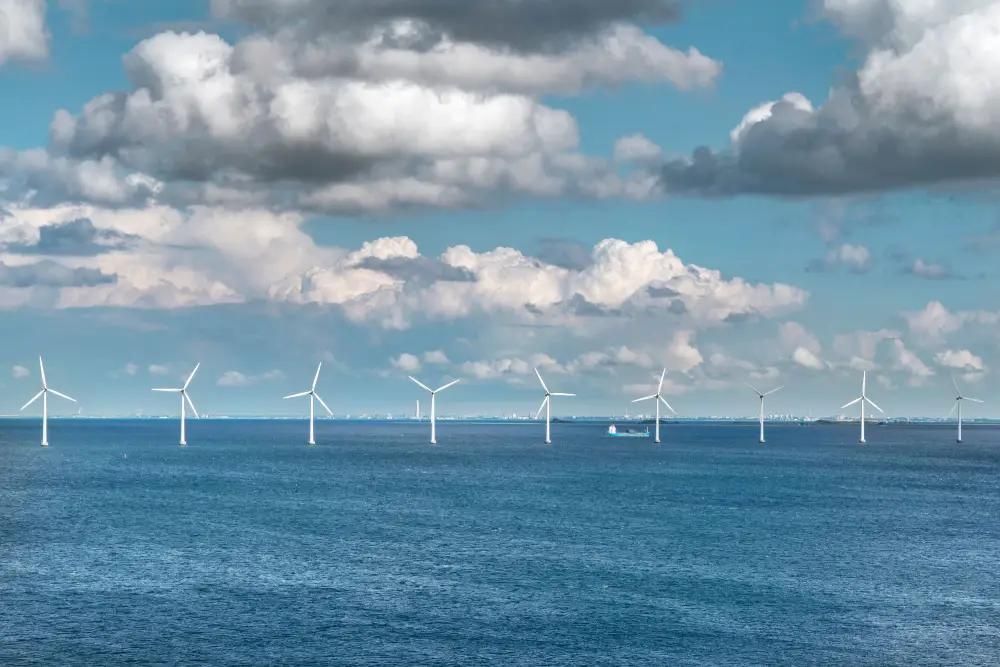
In June 2026, the Japanese government finalized the latest revision to the "Guidelines for the Operation of the Public Occupancy Tendering System in General Sea Areas" (一般海域における占用公募制度の運用指針), a key regulatory framework supporting the implementation of the Act on Development of Marine Renewable Energy Power Generation Facilities.
The revised guidelines further refine Japan's offshore wind tendering regime by strengthening project feasibility assessments, reducing early-stage development risks, and enhancing regulatory transparency and long-term policy stability. Market participants generally view the revision as a significant milestone, signaling that Japan's offshore wind sector is gradually transitioning from an early-stage development market to a more mature and sustainable growth phase.
Evaluation Framework Continues to Balance Price Competitiveness and Project Viability
Under the revised guidelines, offshore wind development in Japan's designated promotion zones will continue to be awarded through a competitive public tender process, with winning developers selected jointly by the Minister of Economy, Trade and Industry and the Minister of Land, Infrastructure, Transport and Tourism.
The evaluation framework retains its existing structure, allocating 120 points each to electricity supply price and project viability, for a total of 240 points. The approach underscores the government's continued emphasis on balancing price competitiveness with the ability to successfully deliver projects.
Project viability assessments cover a broad range of criteria, including project execution capability, construction and operations planning, supply chain resilience, power supply security, stakeholder engagement mechanisms, fisheries coexistence measures, and contributions to regional economic development. As a result, development consortiums with proven project track records, strong financial capacity, and established local partnerships are expected to enjoy a competitive advantage in future tender rounds.
Market analysts note that the Japanese government is gradually shifting its policy focus away from pure price-based competition toward competition based on long-term execution capability. The revised framework is intended to encourage participation by developers capable of delivering projects reliably while fostering sustainable coexistence with local communities and fisheries stakeholders.
Expanded Centralized Site Surveys Aim to Reduce Early-Stage Development Risks
Another key element of the latest revision is the continued expansion of the centralized site survey program led by the Japan Organization for Metals and Energy Security (JOGMEC).
Under the framework, critical development data, including wind resource conditions, metocean characteristics, and seabed geotechnical information, will be collected through government-led or designated agency surveys and made available to project developers. Compared with the previous approach, under which developers were required to invest substantial resources in conducting their own site investigations, the new system is expected to significantly reduce upfront development costs and information asymmetry while improving the accuracy of bid pricing and project cost estimates.
Industry stakeholders believe the initiative will help attract a broader range of international developers to participate in Japan's offshore wind market, while also increasing the likelihood of successful project delivery in future tender rounds.
Stronger Decommissioning Obligations and Financial Due Diligence Requirements
To reduce the risk of project delays, suspension, or premature termination, the latest revision also incorporates regulatory practices that have been widely adopted in mature European offshore wind markets.
Under the revised framework, developers will be required to submit comprehensive decommissioning and project termination plans at the bidding stage, including decommissioning cost estimates, third-party verification, and financial security arrangements. These measures are intended to ensure that offshore wind facilities can be safely decommissioned and affected sea areas restored even in the event of financial distress or developer insolvency.
In addition, developers must provide more robust financial plans covering capital expenditure estimates, financing arrangements, sensitivity analyses for interest rate and foreign exchange fluctuations, and projected internal rates of return (IRR). The enhanced disclosure requirements are designed to facilitate regulatory review and strengthen assessments of long-term project viability.
30-Year Project Tenure Supports Long-Term Financing
With respect to development rights management, the Japanese government has maintained the principle that offshore wind projects in designated promotion zones will be granted a project certification period of up to 30 years.
Industry analysts note that a longer development and operational timeframe can enhance project bankability, reduce financing costs, and increase the willingness of international investors and lenders to participate in the market. At the same time, developers will be expected to adhere more strictly to committed project schedules and development obligations. Failure to achieve key project milestones without justifiable reasons could result in adjustments to certification status or other regulatory measures.
Local Coexistence and Supply Chain Resilience Emerge as Key Evaluation Criteria
Notably, the latest revision places greater emphasis on local stakeholder engagement and regional economic benefits within the evaluation framework.
Beyond technical capabilities and bid pricing, the assessment process will increasingly focus on developers' ability to engage and coordinate with local governments, fisheries organizations, and port authorities, as well as the economic value they can generate through local employment, industrial development, and supply chain localization.
Market observers note that Japan's offshore wind sector has gradually developed a "local coexistence" model, under which successful project development depends not only on technical expertise and financial strength, but also on the ability to establish effective stakeholder management frameworks. Developers that can demonstrate strong local partnerships and community engagement are expected to be better positioned in future tender competitions.
Japan's Offshore Wind Market Enters a Critical Growth Phase
As Japan continues to advance its 2050 carbon neutrality agenda, offshore wind is increasingly regarded as a key pillar of the country's future renewable energy mix. Industry analysis suggests that the period between 2026 and 2030 will mark a significant expansion phase for Japan's offshore wind sector, with multiple designated promotion zones expected to launch successive tender rounds. Both fixed-bottom and floating offshore wind projects are anticipated to progress in parallel.
Under the evolving regulatory framework, international developers with experience in large-scale offshore wind projects in Europe or Asia, strong local partnerships in Japan, and solid financial capabilities are expected to hold a competitive advantage.
However, competition is also set to intensify. Developers will be required to balance cost competitiveness, technical capabilities, and local stakeholder expectations, while also addressing increasing requirements related to supply chain localization, decommissioning obligations, and environmental impact assessments. This will place higher demands on overall project management and execution capabilities.
Overall, the latest revision contributes to a more mature, transparent, and predictable market framework for Japan's offshore wind sector, helping to reduce development risks and attract long-term capital. Ultimately, success in the market will depend on developers' ability to integrate project execution strength, local coexistence, and supply chain capabilities, in alignment with Japan's energy transition and regional development objectives.
